

Photos by Terry Manning
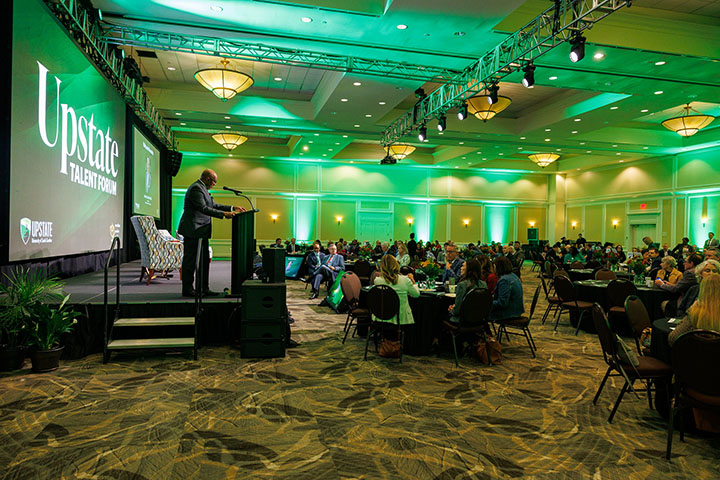
Business executives, educators and regional leaders gathered at the Spartanburg Marriott for the fourth annual Upstate Talent Forum, hosted by the University of South Carolina Upstate. The forum explored strategies to strengthen the region’s talent pipeline through collaboration among employers, higher education institutions and community partners.
This year’s theme, “The Talent Imperative: Building a Future-Ready Southeast”, framed discussions on economic trends, skills development and partnerships between education and industry to help communities across the Southeast prepare for future talent needs.
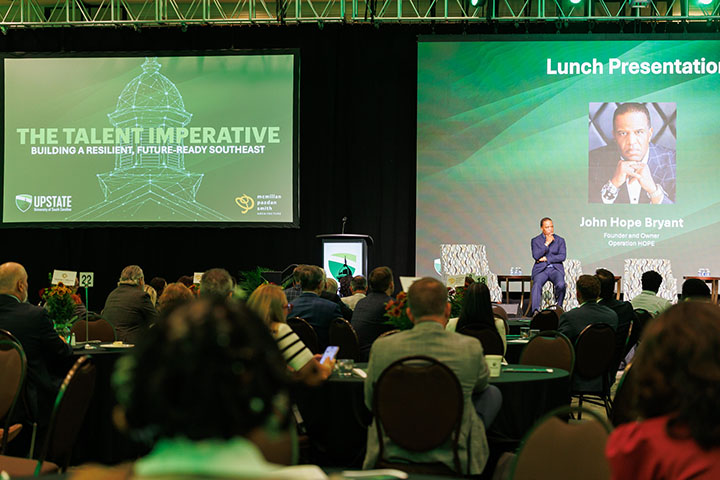
USC Upstate Chancellor Bennie L. Harris joined a distinguished lineup of business and education leaders, including Jeff Korzenik, chief economist for Fifth Third Commercial Bank; Kara Bloomberg, president of Landrum; John Hope Bryant, founder, chairman and CEO of Operation HOPE; Matt Sigelman, president of the Burning Glass Institute; Bert Thornton, vice chairman emeritus of Waffle House; Sherry Hartnett, principal consultant with Hartnett Group LLC; and Laura Ullrich, director of economic research for North America at Indeed Hiring Lab.
USC Upstate Students Take Center Stage
A defining feature of this year’s forum was the opportunity for students to connect directly with business executives and regional leaders. More than 100 USC Upstate students representing majors and disciplines across the university attended the event, participating in in-depth conversations with C-suite executives.
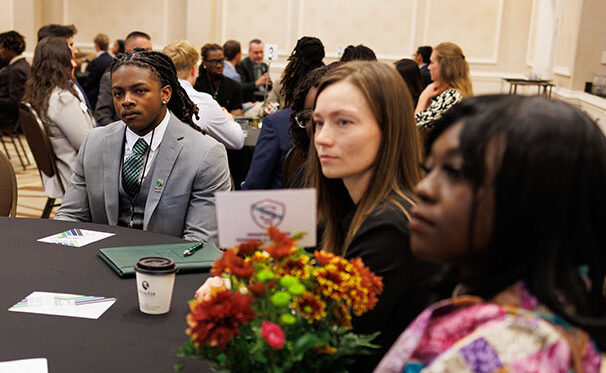
Hannah Terpack, director of Career Management at USC Upstate, said students made a strong impression on business and industry leaders through their preparation, thoughtful questions and engagement.
“Our students are curious, concerned and futuristic about their careers,” Terpack said. “There was not a disengaged listener in that room.”
Their engagement translated into tangible opportunities. Students were approached about internships after asking questions during sessions, while one Spartan connected with a chief human resources officer after sharing a background that included three human resources-related internships. More than 20 professionals gave students their time to share their interests, seek career advice and build connections.
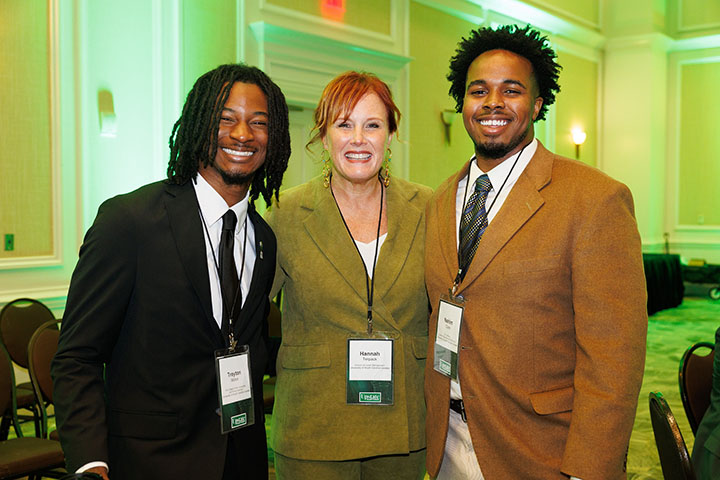
Terpack said the experience reflected the university community’s commitment to student development and demonstrated that business and industry value USC Upstate’s efforts to prepare students to meet talent needs.
“It was evidence of the passion that the faculty, staff and administrators at the university pour into student development in support of our mission and the undeniable recognition that business and industry truly value our efforts to meet their talent needs,” Terpack said.
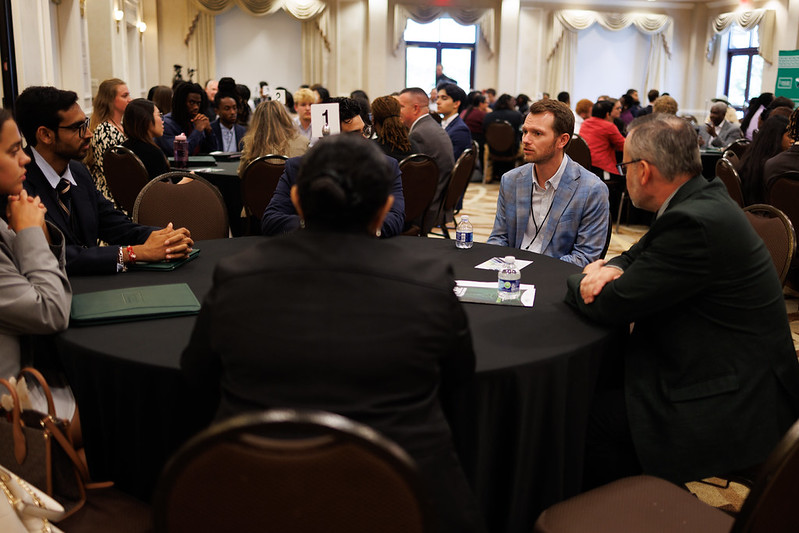
For Treyton Moton, a junior communications major at USC Upstate, the forum provided an opportunity to learn from professionals while exploring the importance of mentorship and career development.
“This conference is essential for our USC Upstate community,” Moton said. “Being able to participate in such a highly professional event was a wonderful opportunity, whether it was learning about the power of mentorship or meeting so many professionals and hearing about their businesses. I can’t wait to participate in the next Upstate Talent Forum!”
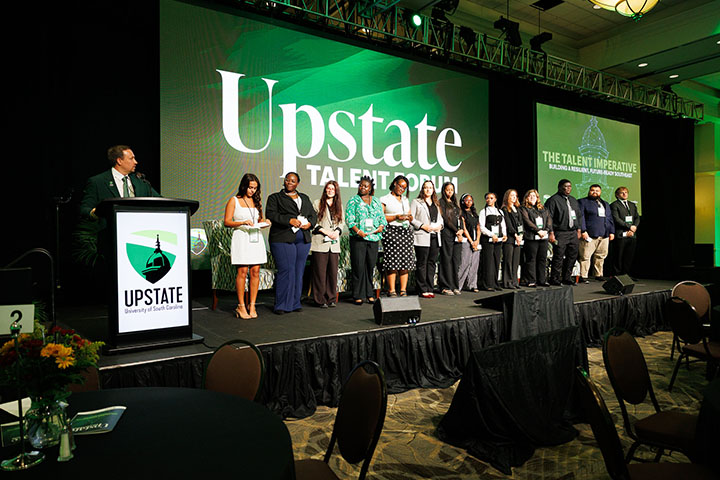
Mentorship and Leadership Lead the Conversation
Mentorship emerged as a recurring theme throughout the forum, particularly in discussions led by Thornton and Hartnett. Their sessions highlighted the value of intentional professional relationships, clear communication and guidance from people with experience in the workplace.
Thornton emphasized the influence of professional networks, and the people individuals choose to learn from throughout their careers.
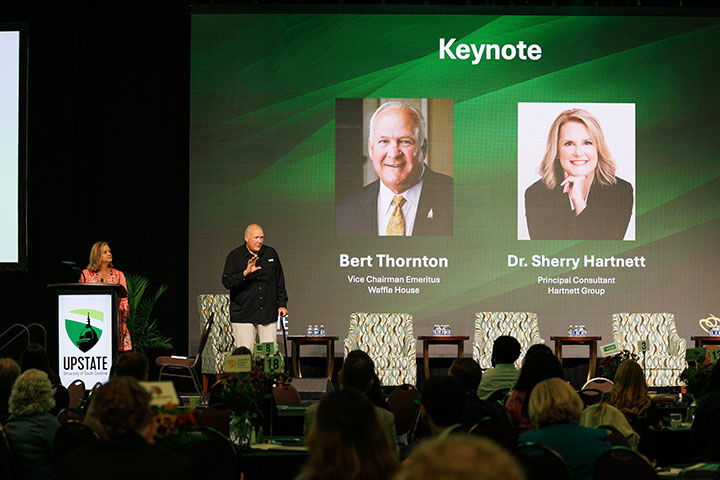
“If you want to be successful, hang around successful people,” Thornton said. “As a matter of fact, who you hang around at this and every stage in your life will determine where you end up.”
Hartnett also highlighted the importance of leaders investing in the development of others.
“Some of the most meaningful work we do as leaders is helping other people grow,” Hartnett said. “It was a privilege to share ideas, celebrate successes and learn alongside so many people committed to building stronger talent pipelines.”
The conversations encouraged students to recognize that mentorship is not limited to senior executives. Building relationships with multiple mentors and supporting peers and younger students can also contribute to professional growth. For employers, the discussions highlighted the importance of establishing clear expectations and communication practices to make mentoring relationships effective.
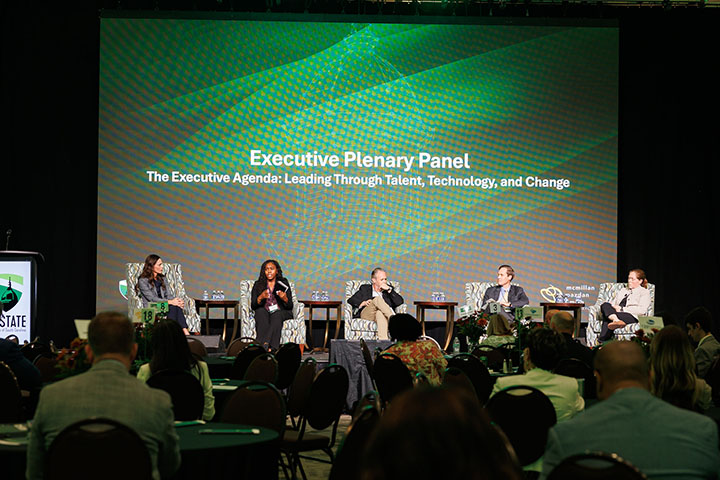
Other sessions examined the broader forces shaping the region’s labor force. Korzenik addressed economic trends affecting the ability to attract talent, investment and growth. Bryant challenged attendees to consider economic opportunity and mobility, while Ullrich explored changing labor market conditions and the implications of artificial intelligence for jobs.
Thornton also praised the forum’s conversations about aligning higher education with employer needs.
“These were some of the most cogent, poignant, on-topic, accurate remarks I’ve ever heard at a conference about higher education’s need to match what the workforce demands,” Thornton said.
Together, the discussions reinforced that preparing the next generation of workers requires adaptable skills, strong professional relationships and collaboration across industries and educational pathways.
Collaboration Drives Regional Development
The forum’s emphasis on collaboration reflects the importance of bringing employers and educators together. For example, USC Upstate’s Industrial Engineering program traces its origins to conversations between business leaders and university representatives at a previous Upstate Talent Forum. Those discussions helped turn a regional need into a vibrant academic program designed to prepare graduates for careers in industry.
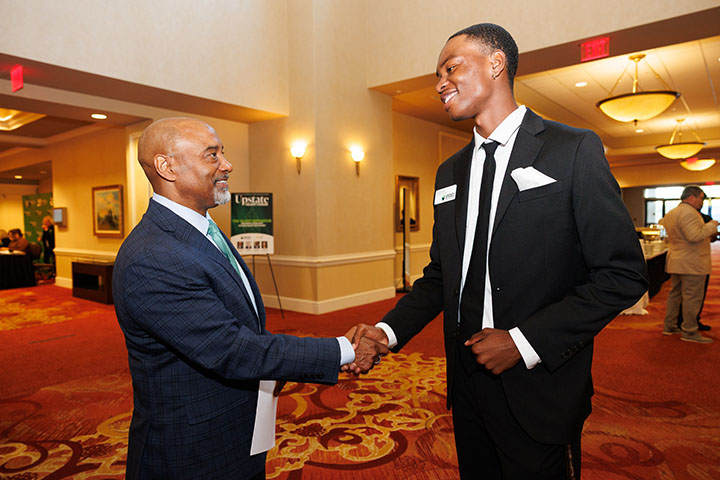
Christopher Taylor, USC Upstate’s vice chancellor for external affairs and chief of staff and one of the forum’s organizers, said the strong turnout of industry leaders, educators and sponsors reflected a shared dedication to enhancing the region’s future.
“This was truly a collective commitment to economic and workforce development while recognizing we have the talent available,” Taylor said.
He emphasized that the talent pipeline preparation includes multiple pathways, from technical training to two- and four-year degrees.
“The biggest takeaway is that everything we discuss can be applied to any community across the Southeast,” Taylor said, highlighting the forum’s potential to help industries attract and retain talent.
The Upstate Talent Forum was convened in partnership with OneSpartanburg, Inc., Greater Greer Chamber of Commerce and Greenville Chamber of Commerce. McMillan Pazdan Smith served as the presenting sponsor, with Landrum serving as a planning partner and sponsor.
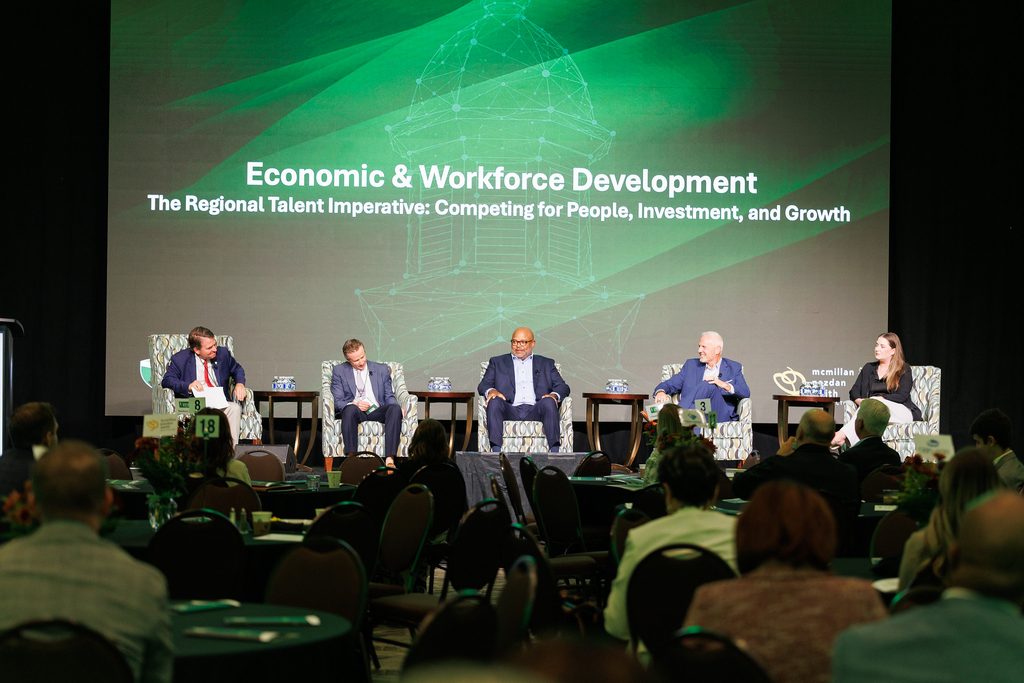
The annual forum connects business, education and community leaders to identify industry needs and strengthen partnerships. Together, they work to develop solutions that benefit students and employers while supporting long-term economic growth across the Upstate and the Southeast.
More photos can be found on our Flickr albums for Day 1 and Day 2.
For more information, visit the Upstate Talent Forum website.