

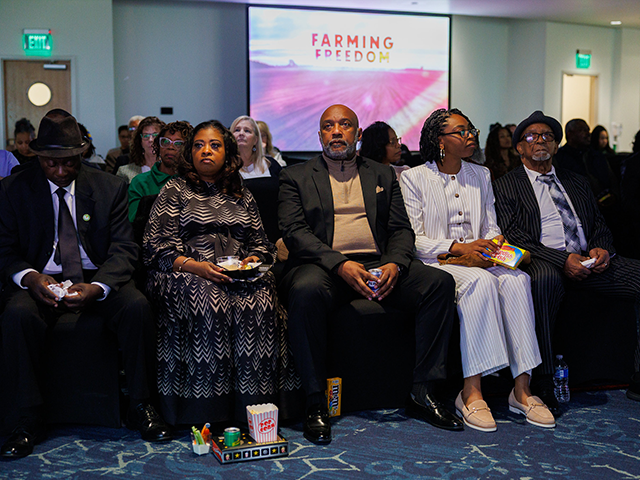
USC Upstate rounded out its Black History Month programming Feb. 28 with an event that held deep personal significance for Chancellor Bennie L. Harris.
The documentary “Farming Freedom, The Inspiring True Story of Black Land Ownership in Mississippi” shown in the CLC ballroom Saturday evening, traces the history of Black land ownership in Mississippi and the U.S. through the story of Henry Harris, the chancellor’s father.
Directed by Kayla Turner Thomas, a two-time Emmy nominated journalist and Chancellor Harris’ niece, “Farming Freedom” began as conversations between Thomas and her grandfather, Henry Harris, and grew into a film that explores discriminatory laws and practices that have hindered Black land ownership, such as Black Codes, unfair labor contracts and sharecropping.
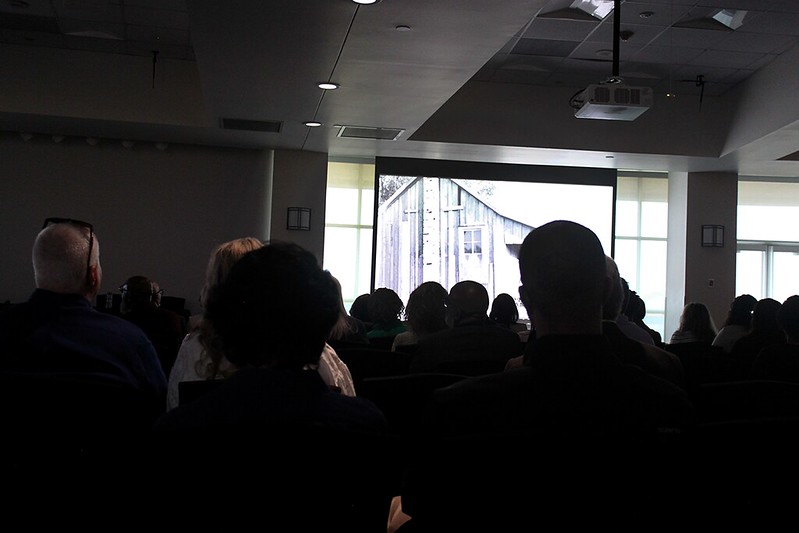
Sharecropping, for example, forced many formerly enslaved people into debt. That led many Black people to pursue independent farming. By the early 1900s, more than 20,000 Black farmers had acquired land in Mississippi, according to the documentary.
But keeping the land proved difficult. Discrimination in federal farming assistance and tax laws, even being “run off” the land, drove many Black farmers out of the South. Ultimately, more than 90% of Black farmland was lost, according to the film.
Before the decline, Henry Harris’ father, John, born in 1889, purchased 120 acres of land in 1949. John Harris’ investment gave his family opportunities, including family plots for burials and places for sons’ homes.
But eventually John Harris had to sell half the acreage. Though Henry’s brothers had moved away by the 1960s, Henry continued to care for the remaining 60 acres. He took on additional work, including at a local factory, to supplement his farming income, and was determined his children would earn more a formal education than he had.
A settlement in 2000 between Black farmers and the USDA over racial disparity and discrimination allowed Harris to pay off the land. The property is now held in an LLC to protect it for the Harris family and prevent further loss.
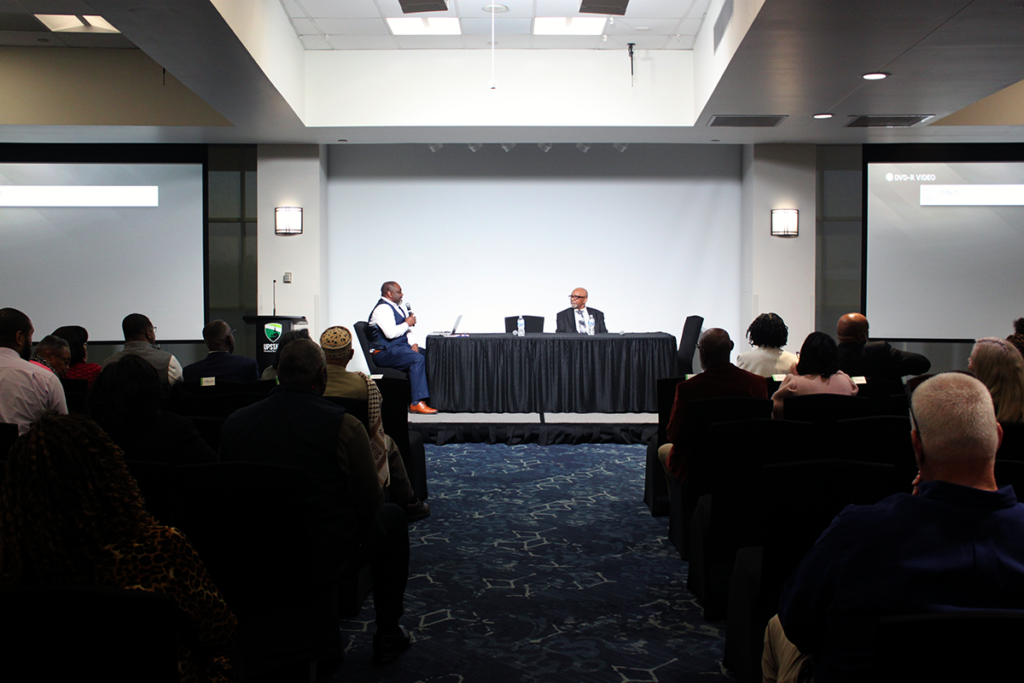
Center for Africana and African American Studies (CAAAS) Director Marlon Smith briefly interviewed Henry Harris following the film. Harris said when his granddaughter approached him about the film, he “didn’t have any idea that it would come to this, that it would be helpful to someone else.”
“As older parents, we struggle and we don’t tell our kids the struggle we went through,” he said. “Sometimes we want to depress it, don’t want to remember it.”
But Harris said he’s grateful he shared the history and he stressed to the next generation the importance of honest work and not giving up when things are hard.
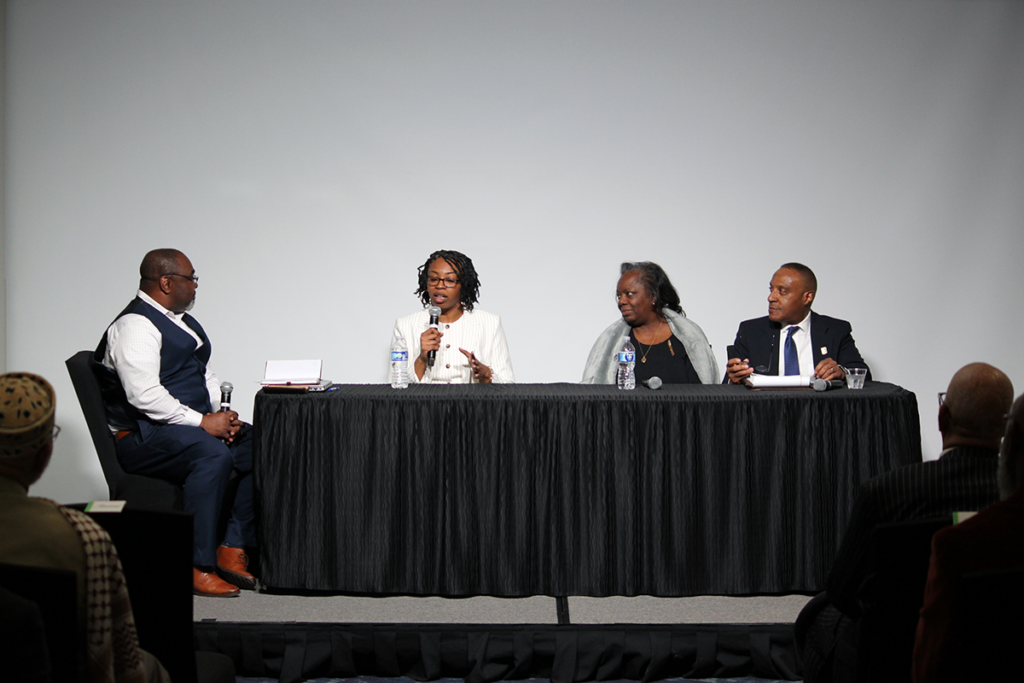
During a panel discussion, Kenneth Robinson, associate professor of sociology at Clemson University, said it’s important younger generations understand modern agriculture (specifically as a career in STEM) so families can keep their land.
The panel also included Upstate history professor Carmen Harris and Thomas. Thomas said reclaiming land is important as is learning about avenues outside of agriculture (such as educational programming and events) that landowners can explore.
She recalled how her grandfather always told his story in a way that kept her on the edge of her seat.
“We would always say, ‘This is such a good story. This should be a movie,’” she recalled.
Thomas encouraged capturing family stories now so that history doesn’t get lost when someone dies: “It’s even easier today, because you have your cell phones and decent quality. Just do it because it’ll be worth it, and you’ll be glad that you did.”
The film screening was the culmination of a month of activities at Upstate, including a Black History Month festival earlier in the day and a recognition of the late civil rights leader and Greenville native Jesse Jackson.
More photos from the event can be found on our Flickr album.