

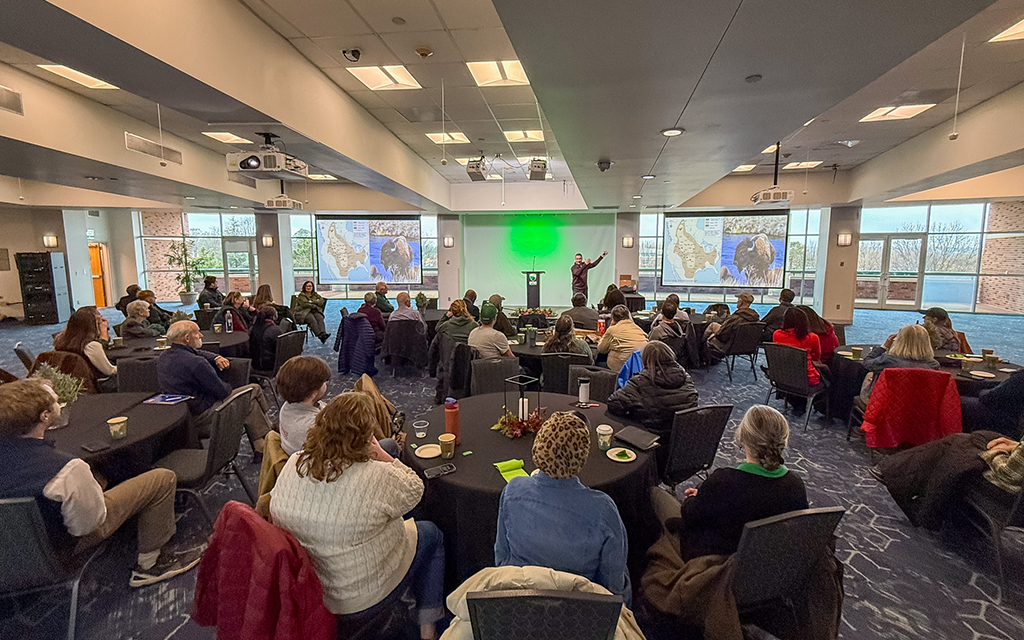
USC Upstate marked its 17th consecutive year as a Tree Campus USA, using its annual Arbor Day observance to highlight the growing need for native plants, biodiversity and accessible green spaces that support both ecological health and student well-being.
Nationally recognized naturalist Josh Arrants, a South Carolina native with 25 years of experience in endangered species work and ecological monitoring, urged campuses and communities to prioritize native vegetation and intentional landscape design. Arrants said native trees and plants strengthen ecosystems, support wildlife and help communities adapt to rising temperatures and shifting environmental conditions.
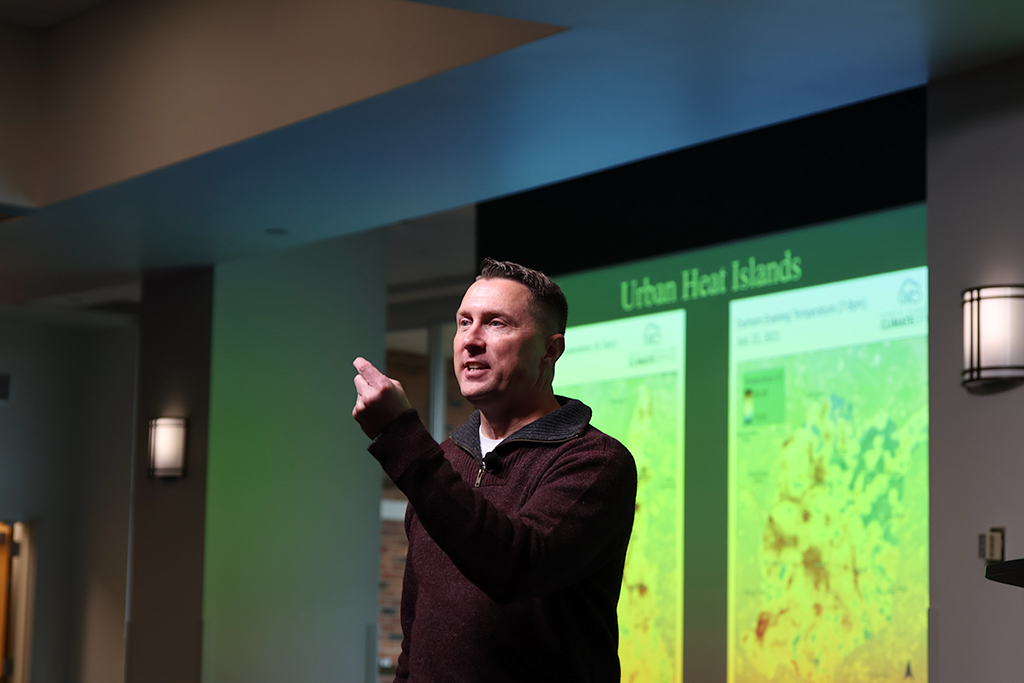
Arrants, owner of Arrants Outdoors and recipient of the 2024 Lindsay Pettus Conservation Award, described biodiversity as a network of “green islands” that sustain life and stabilize natural systems. He encouraged practical, scalable steps such as expanding canopy cover, incorporating porous paving, increasing shade, using lighter-colored materials and adopting green roofs and walls. He also emphasized the ecological value of allowing natural materials like leaves to remain in place and encouraged industries to adopt more sustainable practices.
USC Upstate Foundation Board Chair Suzy Cole shed light on the connection between green spaces and student wellness, pointing to a growing body of national research. According to Cornell University’s Nature Rx initiative1, as little as 10 to 20 minutes in nature can significantly improve mood and reduce stress, while 20 to 30 minutes is ideal for college students, improving focus, lowering stress hormones and boosting overall well-being. The benefits occur whether students walk, sit outdoors or simply observe natural environments.
With more than 3,300 trees planted across campus — including more than 100 in the Food Forest — USC Upstate continues its long-standing commitment to sustainable forest management. The university meets the Arbor Day Foundation’s five national standards for Tree Campus Higher Education recognition: a campus tree advisory committee, a comprehensive tree care plan, dedicated annual expenditures, an Arbor Day observance and student service-learning opportunities.

“The designation is also a reminder of our dedication to preserving and enhancing the natural beauty of our campus through initiatives and programs while promoting a healthy and vibrant environment for our students, faculty and staff,” said Bruce Suddeth, director of Building and Landscape Services.
Established in 2008, the Tree Campus Higher Education program promotes sustainable forestry practices at colleges and universities nationwide. Trees in urban and campus environments help reduce energy costs, improve air and water quality, expand wildlife habitat and create restorative outdoor spaces proven to support student success.